
The most common birds in Ohio are the backyard regulars you can see year-round: the Northern Cardinal (Ohio’s state bird), Blue Jay, American Robin, American Goldfinch, Mourning Dove and Song Sparrow. Add a few woodpeckers, chickadees and wrens, and you’ve covered most of the birds at an Ohio feeder. Ohio has recorded 421 bird species, about 300 of which show up every year, according to the Ohio Department of Natural Resources (ODNR).
This guide covers the 15 birds you’re most likely to see, plus the summer and winter visitors that make each season different.
[Photo: male Northern Cardinal on a branch. Alt text: “Male Northern Cardinal, the most common bird in Ohio”. File: northern-cardinal-ohio.jpg]
Ohio’s most common birds at a glance
Year-round birds in Ohio
1. Northern Cardinal
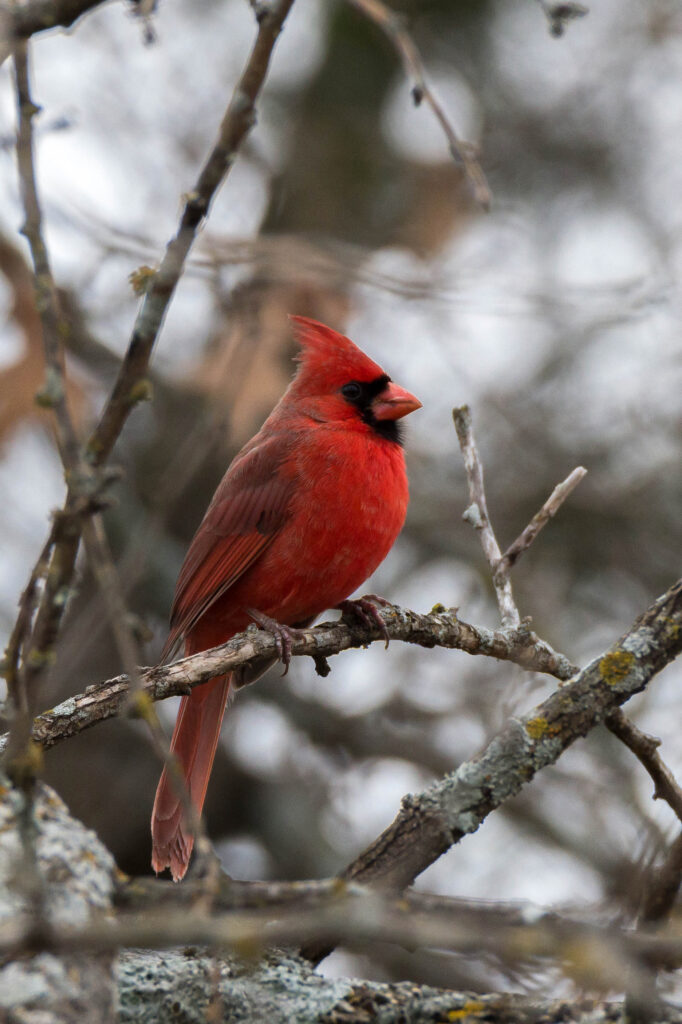
The Northern Cardinal is Ohio’s state bird, adopted in 1933 (Ohio.gov), and it’s the bird most often reported by Ohio birders.
- How to identify it: males are bright red all over with a black face mask and a thick, cone-shaped red-orange bill. Females are warm tan-brown with reddish tinges on the crest, wings and tail.
- Song: loud, clear whistles like cheer-cheer-cheer or birdie-birdie-birdie. Both males and females sing.
- Attract it: black-oil sunflower or safflower seed on a platform or hopper feeder, near dense shrubs where cardinals can hide.
[Photo: male and female Northern Cardinal. Alt text: “Male and female Northern Cardinals, Ohio’s state bird”. File: northern-cardinal-male-female.jpg]
2. Blue Jay
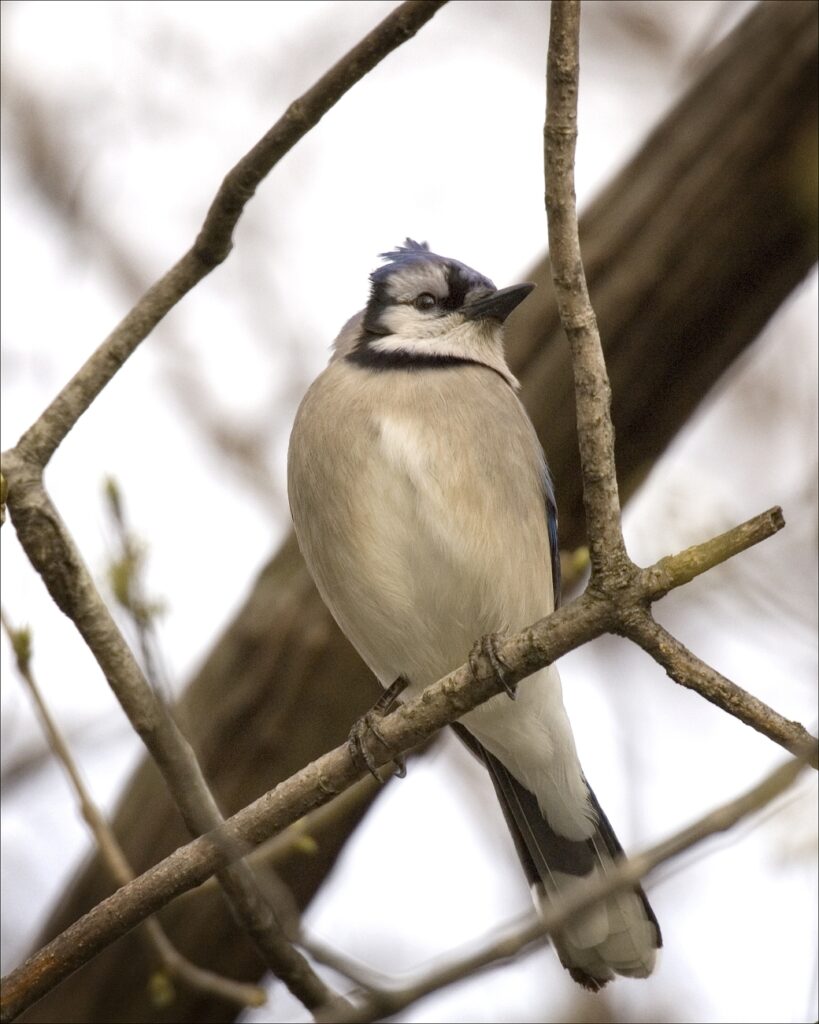
Blue Jays are loud, smart and impossible to miss.
- How to identify it: bright blue above with black and white markings on the wings and tail, a white-gray belly, a black necklace and a pointed crest.
- Sound: a harsh jay-jay call. They also do a convincing imitation of a Red-shouldered Hawk.
- Attract it: peanuts (in or out of the shell) and sunflower seed. Blue Jays love oak trees and famously cache acorns, helping spread oak forests.
3. American Robin
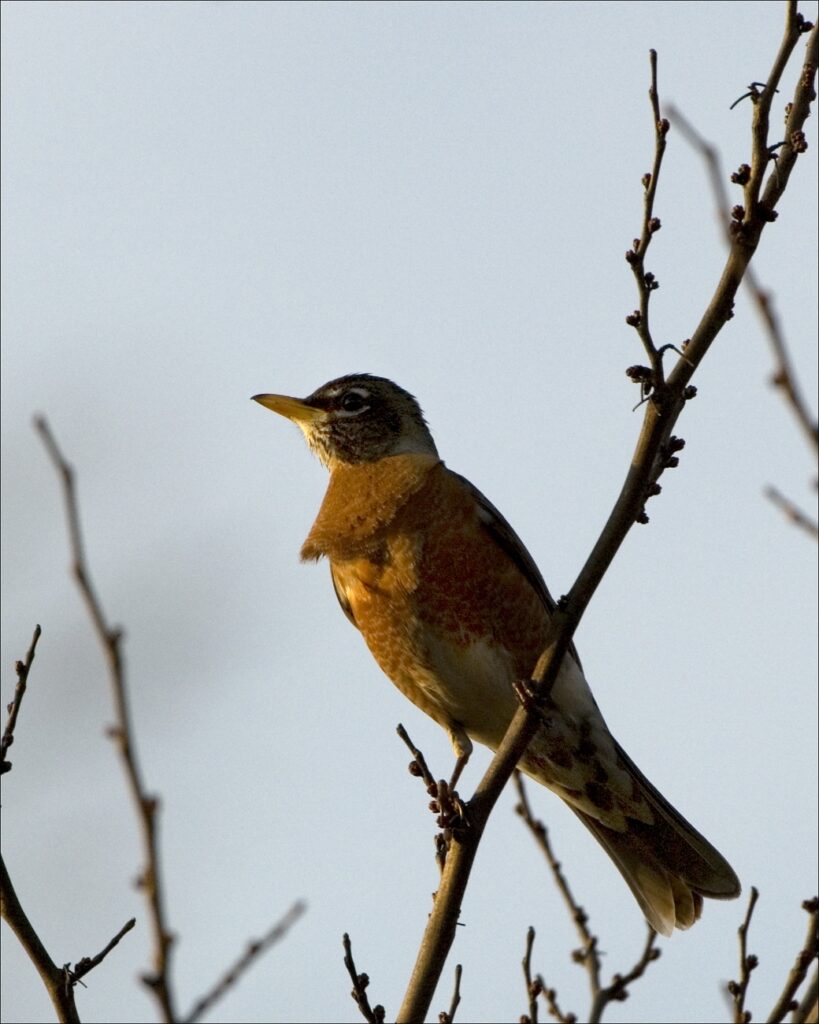
The robin is one of Ohio’s most abundant breeding birds (ODNR).
- How to identify it: gray-brown back, orange breast, and a yellow bill. You’ll often see it hopping across lawns and tilting its head to look for earthworms.
- Season: many robins stay in Ohio all winter but switch to eating berries and move around in flocks, so they seem to disappear from lawns until spring.
- Attract it: robins rarely eat seed. Offer mealworms, chopped fruit, a birdbath, and berry-producing shrubs like serviceberry and dogwood.
4. American Goldfinch
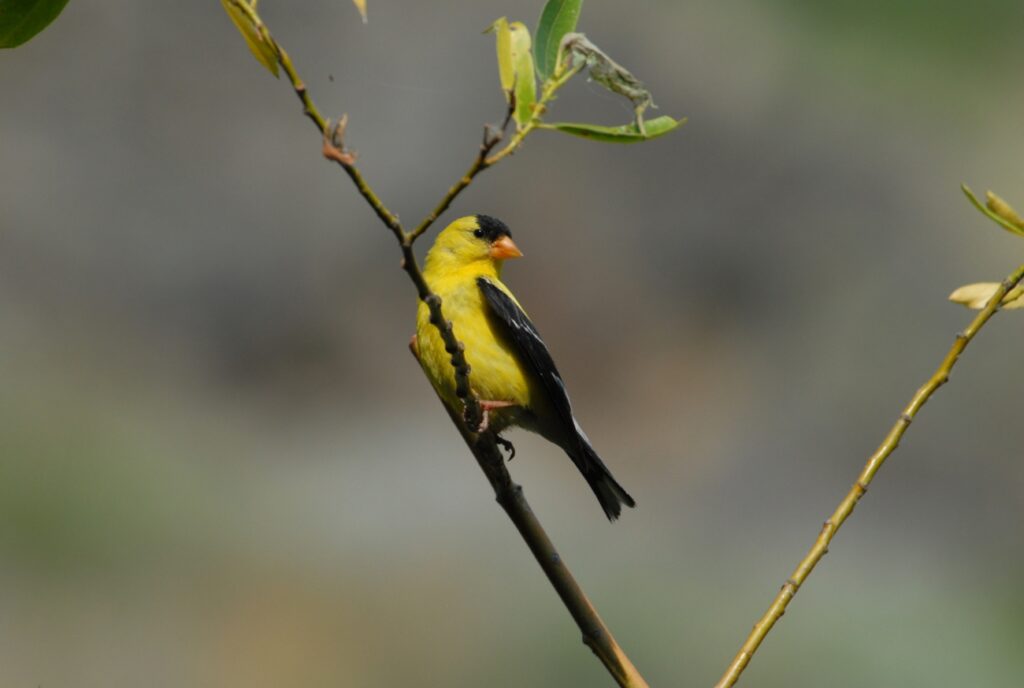
- How to identify it: in summer, males are bright lemon-yellow with a black cap and black wings with white bars. Females are duller olive-yellow. In winter, both turn a drab olive-brown but keep their dark wings with pale bars.
- Song: a cheerful, twittering song, and a flight call that sounds like po-ta-to-chip as they bounce through the air.
- Attract it: nyjer (thistle) seed in a tube or sock feeder, and sunflower hearts. Goldfinches nest late, in July and August, when thistle and other plants go to seed.
5. Mourning Dove
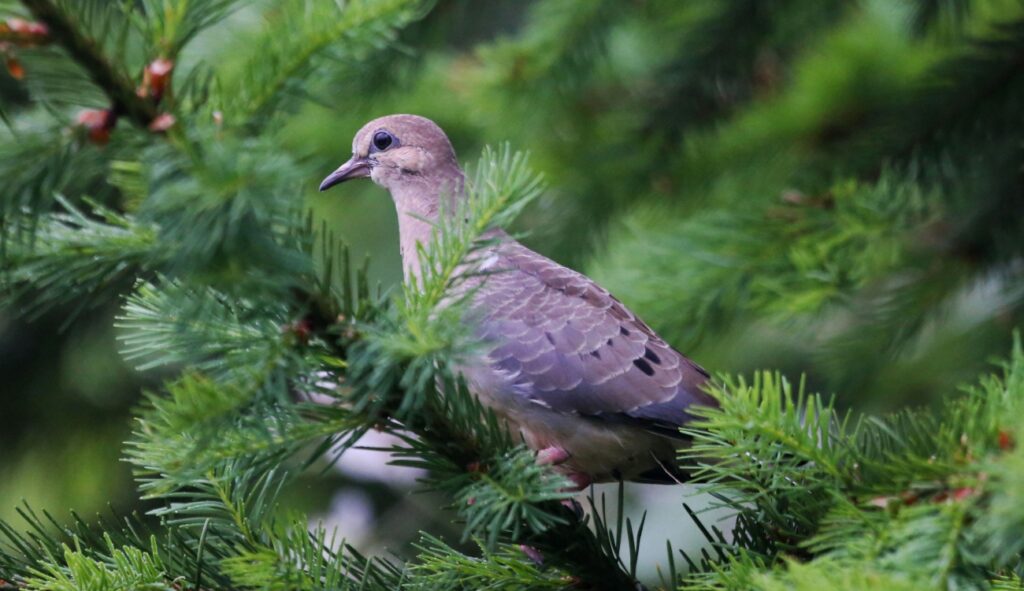
ODNR calls the Mourning Dove one of Ohio’s most abundant birds.
- How to identify it: a slim, soft gray-brown dove with a small head, black spots on the wings, and a long, pointed tail.
- Sound: a soft, mournful ooo-AHH-ooo-ooo-ooo. Their wings make a whistling sound when they take off.
- Attract it: millet, cracked corn or mixed seed scattered on the ground or a platform feeder.
6. Song Sparrow
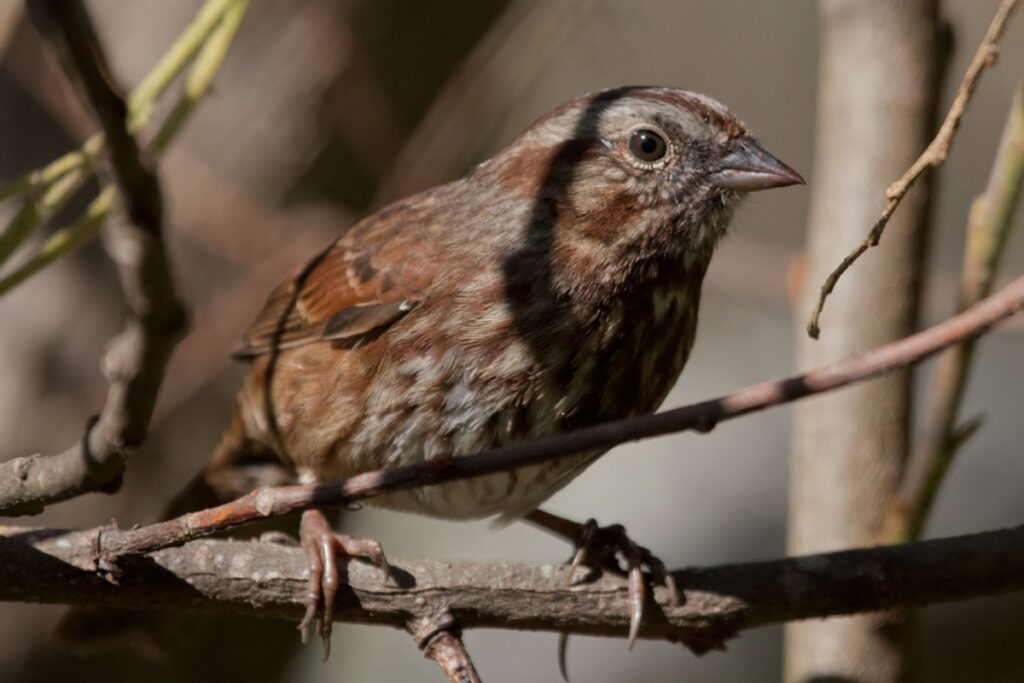
The Song Sparrow is Ohio’s most common and widespread sparrow (ODNR).
- How to identify it: brown and streaky, with heavy streaks on a white chest that often meet in a dark central spot. It pumps its long, rounded tail as it flies.
- Song: a bright, varied song that starts with a few clear notes and ends in a jumble of trills, sung from shrubs and fence posts.
- Attract it: millet or mixed seed scattered on the ground near brushy cover.
7. Red-bellied Woodpecker
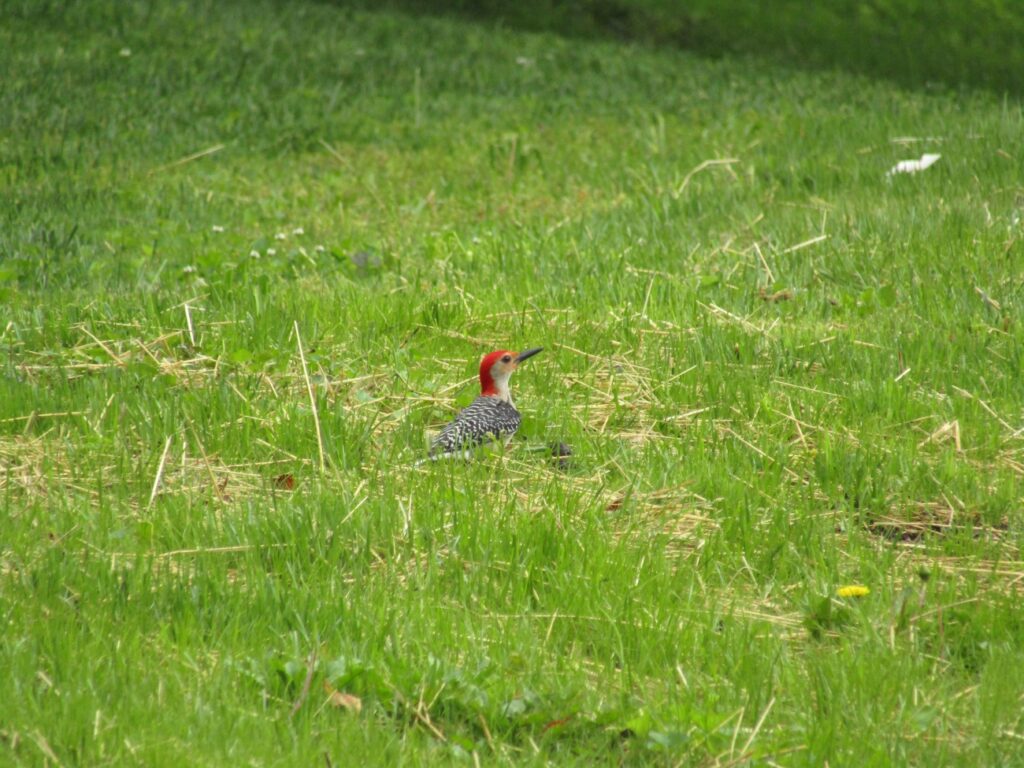
- How to identify it: a medium-sized woodpecker with a black-and-white “zebra-striped” back and a red cap. Males are red from the bill to the back of the neck; females have red only on the nape. The red belly that gives it its name is a faint blush that’s rarely visible.
- Sound: a rolling churr call.
- Attract it: suet, peanuts and sunflower seed.
8. Downy Woodpecker
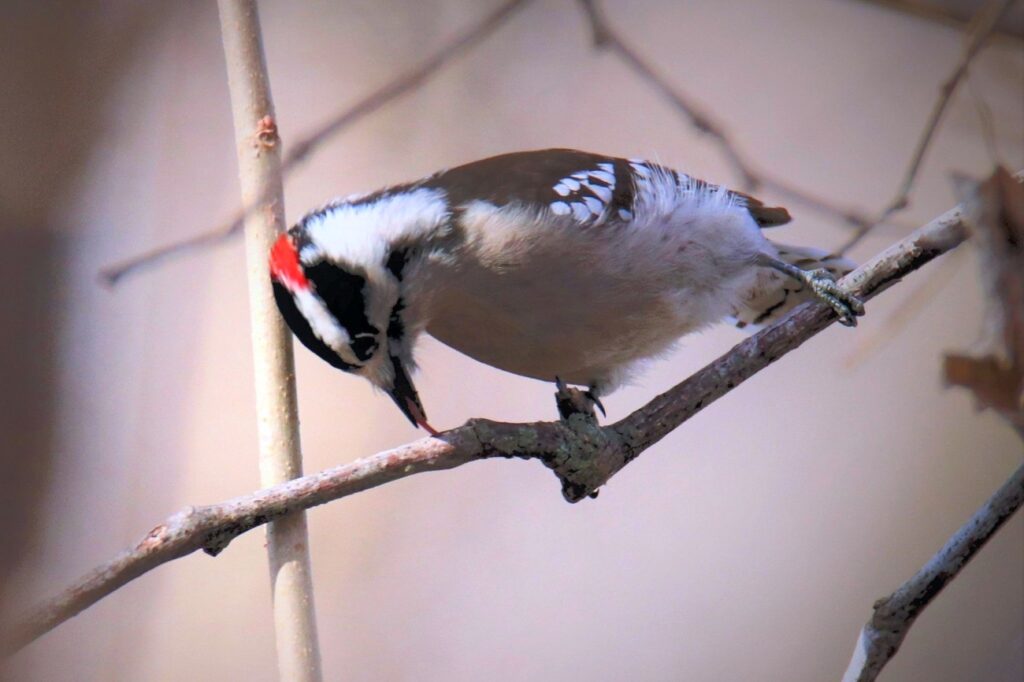
The Downy is Ohio’s most common woodpecker (ODNR) and North America’s smallest.
- How to identify it: black and white with a white stripe down the back. Males have a small red patch on the back of the head. It looks almost identical to the larger Hairy Woodpecker; the Downy’s bill is much shorter, only about a third the length of its head.
- Attract it: suet, especially in winter. Downies also visit sunflower and nyjer feeders.
9. Red-winged Blackbird
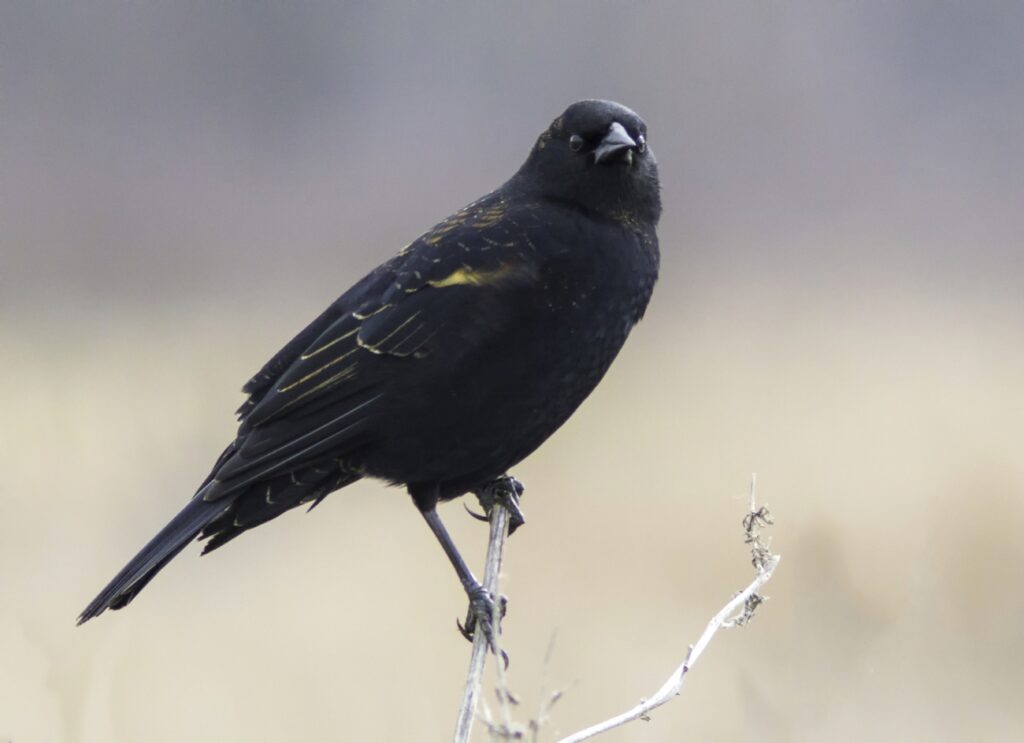
- How to identify it: males are glossy black with bright red shoulder patches edged in yellow. Females are dark brown and heavily streaked, a bit like a large sparrow.
- Song: a loud, gurgling conk-la-ree!, one of the first signs of spring.
- Season: males return to Ohio’s marshes as early as late February to claim territories. Many leave in late fall, though some flock together through winter.
- Watch out: males defend their nests fiercely and will dive at people who get too close.
10. Tufted Titmouse
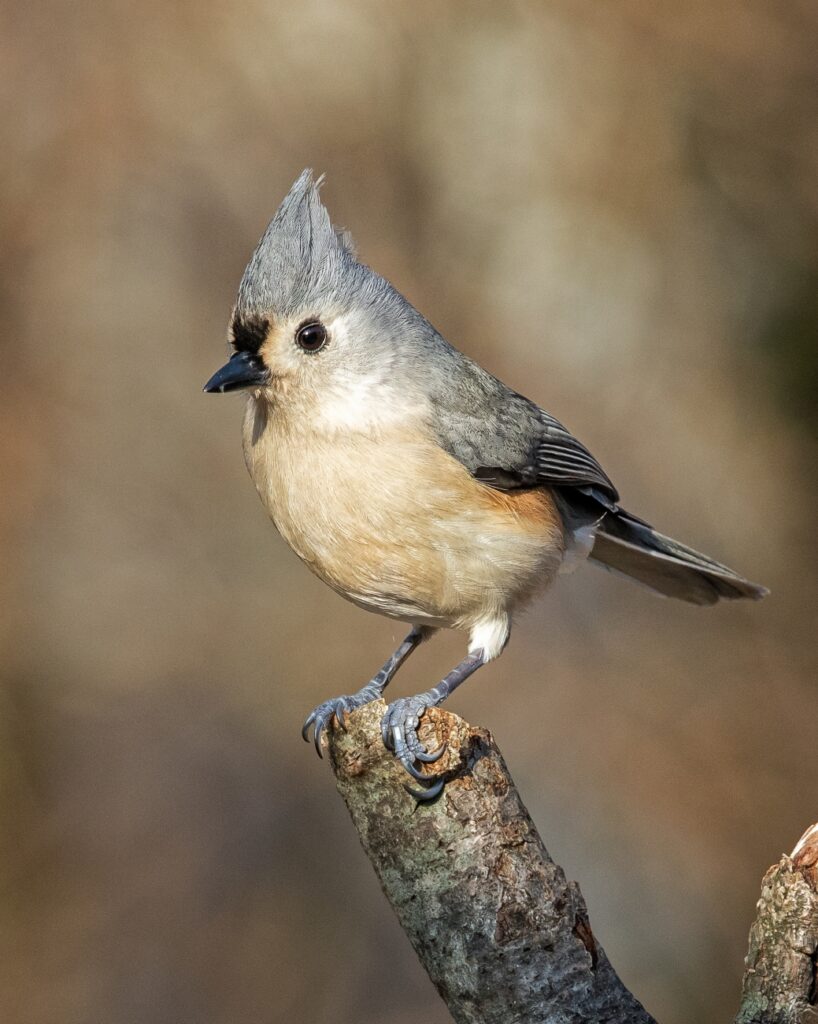
- How to identify it: a small, soft-gray bird with a pointed crest, a black patch above the bill, big dark eyes, and rusty-orange flanks.
- Song: a whistled peter-peter-peter.
- Attract it: sunflower seed and peanuts. Titmice often grab one seed and fly off to crack it open somewhere else.
11. Carolina Chickadee and Black-capped Chickadee
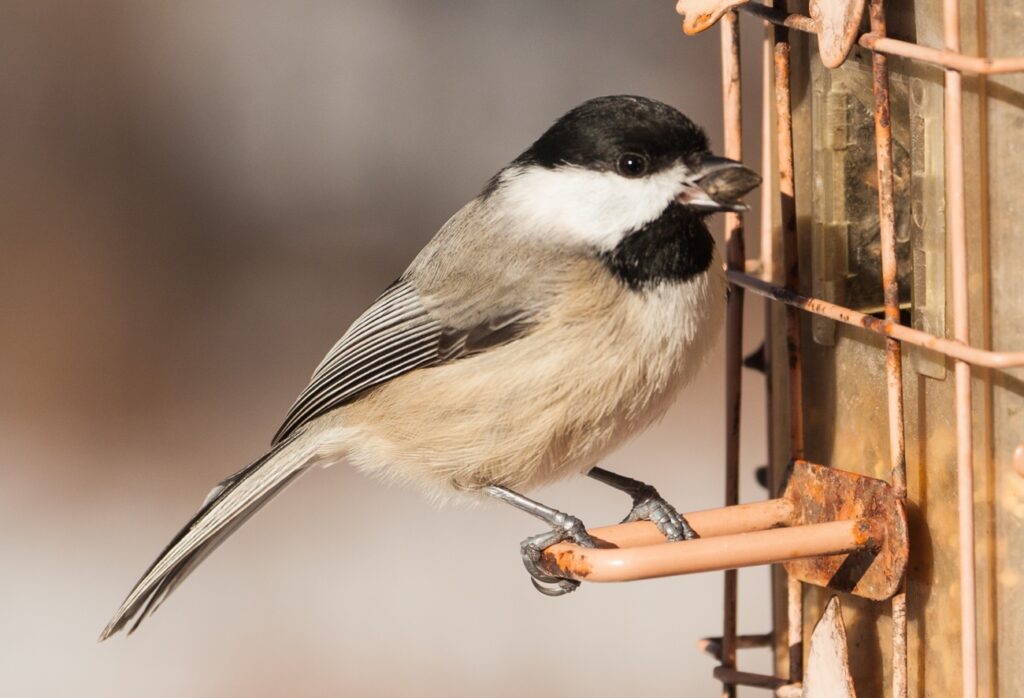
Ohio has two chickadees, and they look almost identical: black cap and bib, white cheeks and gray wings. The Carolina Chickadee lives in central and southern Ohio, and the Black-capped Chickadee in the northern part of the state. Where they meet, they sometimes interbreed.
- How to tell them apart: location is your best clue. Song helps: Carolina Chickadees usually sing a four-note fee-bee-fee-bay, while Black-capped Chickadees sing a two-note fee-bee. Black-capped Chickadees also have whiter edges on their wing feathers.
- Attract them: sunflower seed, suet and nest boxes.
12. White-breasted Nuthatch
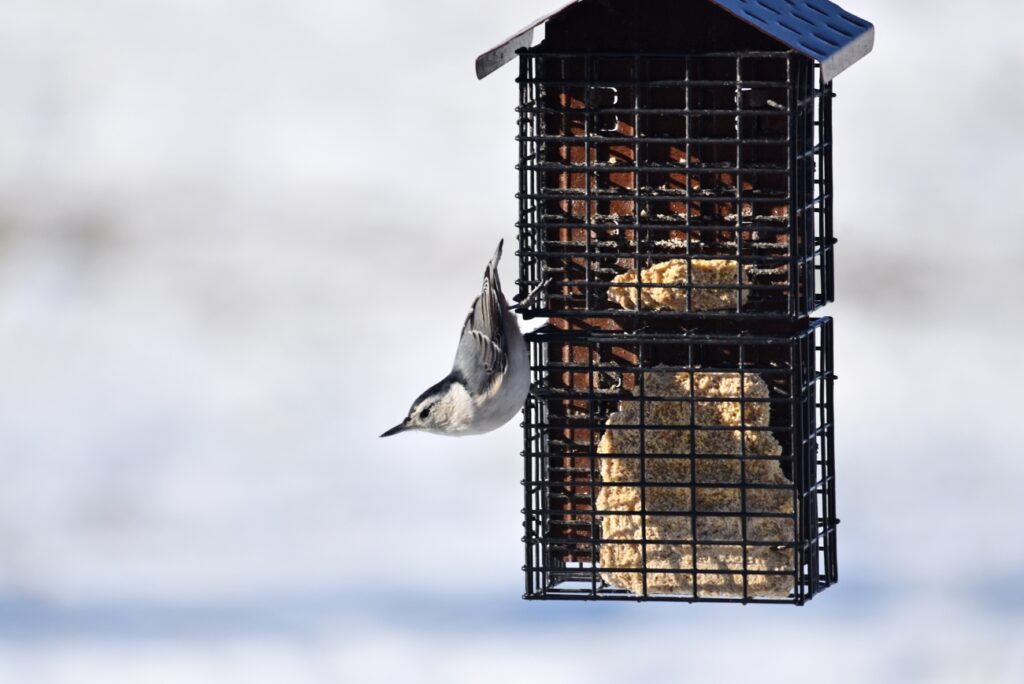
- How to identify it: blue-gray back, white face and belly, black cap, and a habit of climbing headfirst down tree trunks.
- Sound: a nasal yank-yank.
- Attract it: sunflower seed, peanuts and suet.
13. Carolina Wren
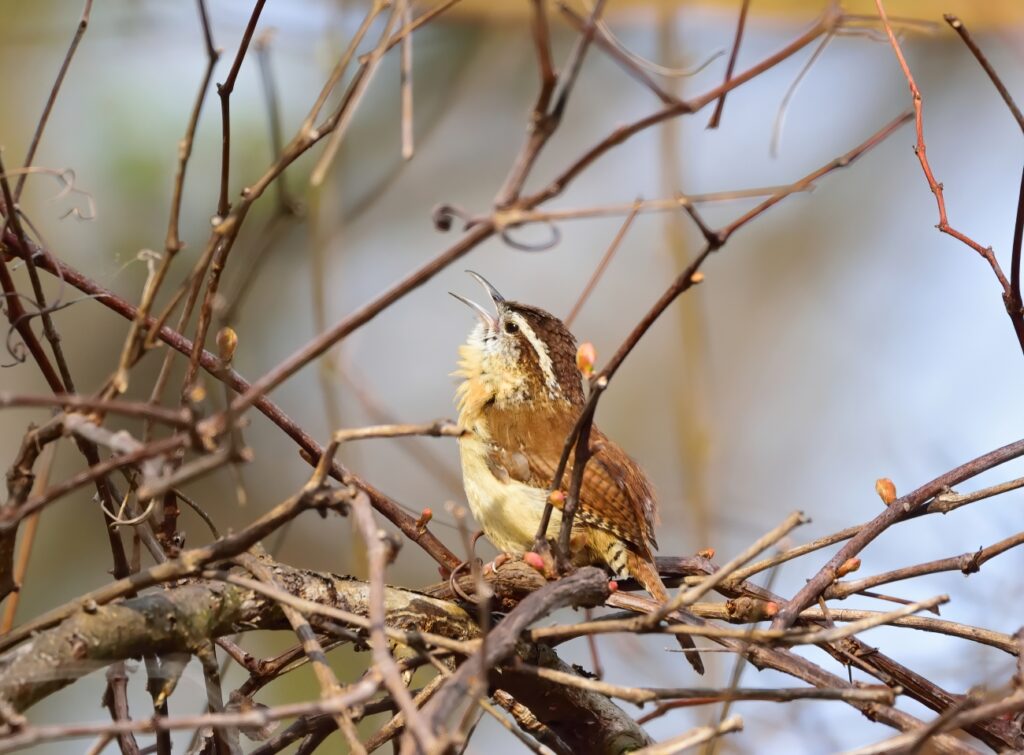
- How to identify it: a small, round, rusty-brown bird with a bold white eyebrow stripe and a tail it often holds cocked upward.
- Song: an astonishingly loud tea-kettle, tea-kettle, tea-kettle for such a small bird.
- Attract it: suet and mealworms, plus brush piles for cover. Carolina Wrens are known for nesting in odd spots like hanging plants, mailboxes and garage shelves.
14. House Finch
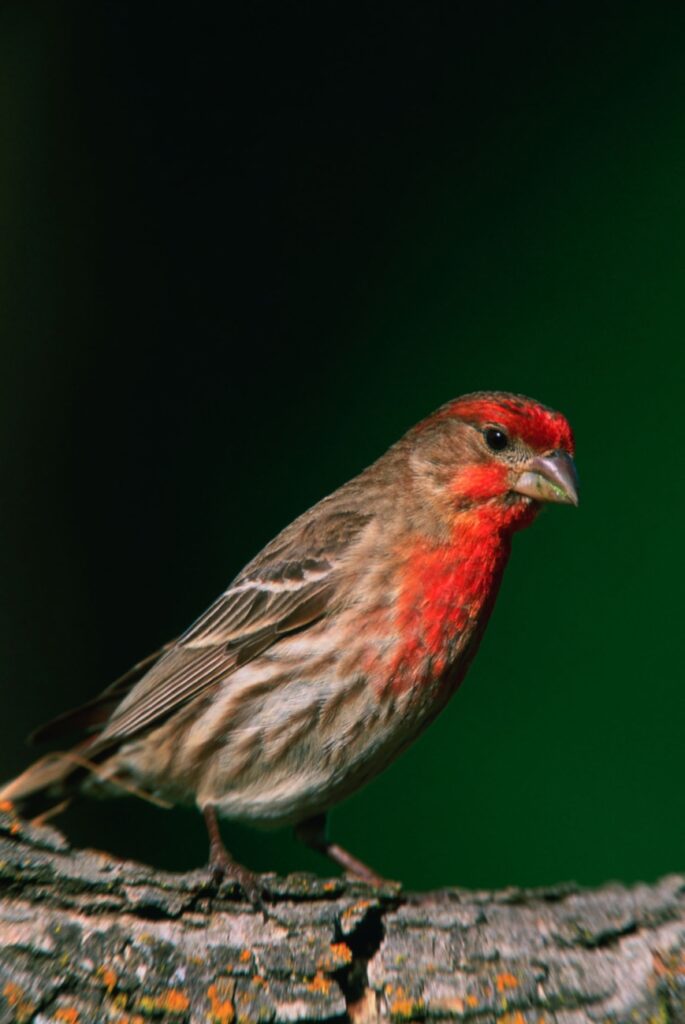
- How to identify it: males have a red or orange-red head, breast and rump with brown streaks on the belly. Females are plain gray-brown and streaky. Look for the House Finch’s streaked belly to tell it from the all-red male cardinal.
- Background: House Finches are native to the western U.S. They were brought east as caged birds and released on Long Island, New York, around 1940, then spread across the eastern states.
- Attract it: sunflower seed in tube or hopper feeders.
15. European Starling
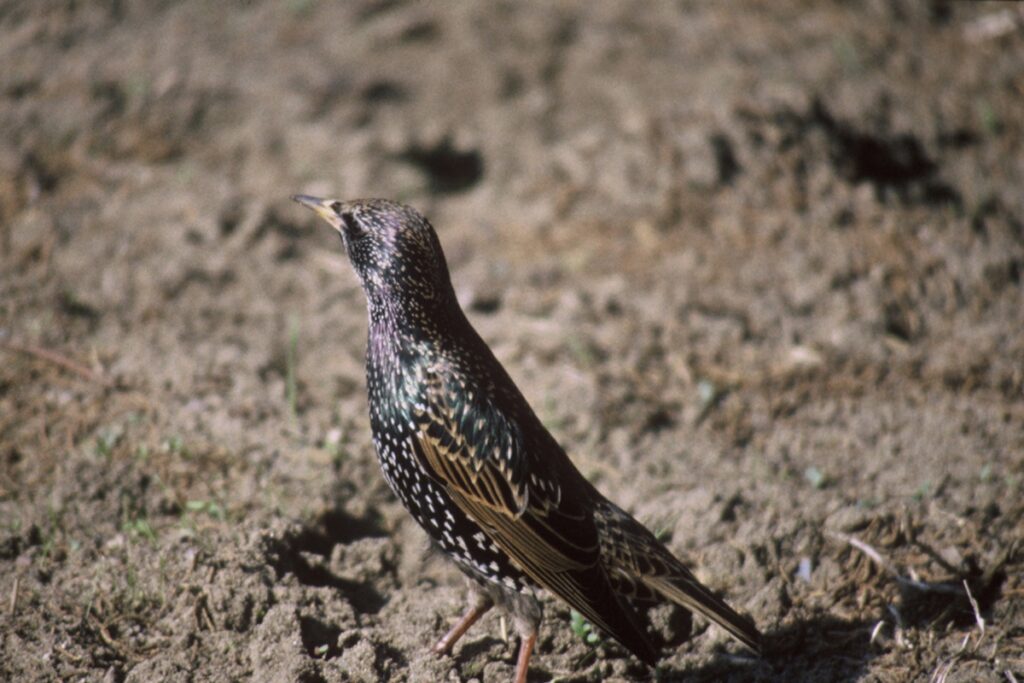
ODNR calls the European Starling probably Ohio’s most numerous bird.
- How to identify it: a stocky black bird with a short tail and pointed yellow bill in spring. In fall and winter, its glossy purple-green feathers are covered in white spots and its bill turns dark.
- Background: starlings aren’t native. About 100 were released in New York City’s Central Park in 1890 and 1891, and their descendants spread across North America.
- At the feeder: starlings often crowd out native birds at suet. Upside-down suet feeders help, because woodpeckers can feed hanging below them but starlings struggle.
Summer birds in Ohio
These birds arrive in spring, nest in Ohio, and leave in fall.
- Indigo Bunting (May to September): males are brilliant blue all over; females and young are plain brown. Look for them singing from wires and treetops along brushy field edges and roadsides. They eat insects and small seeds.
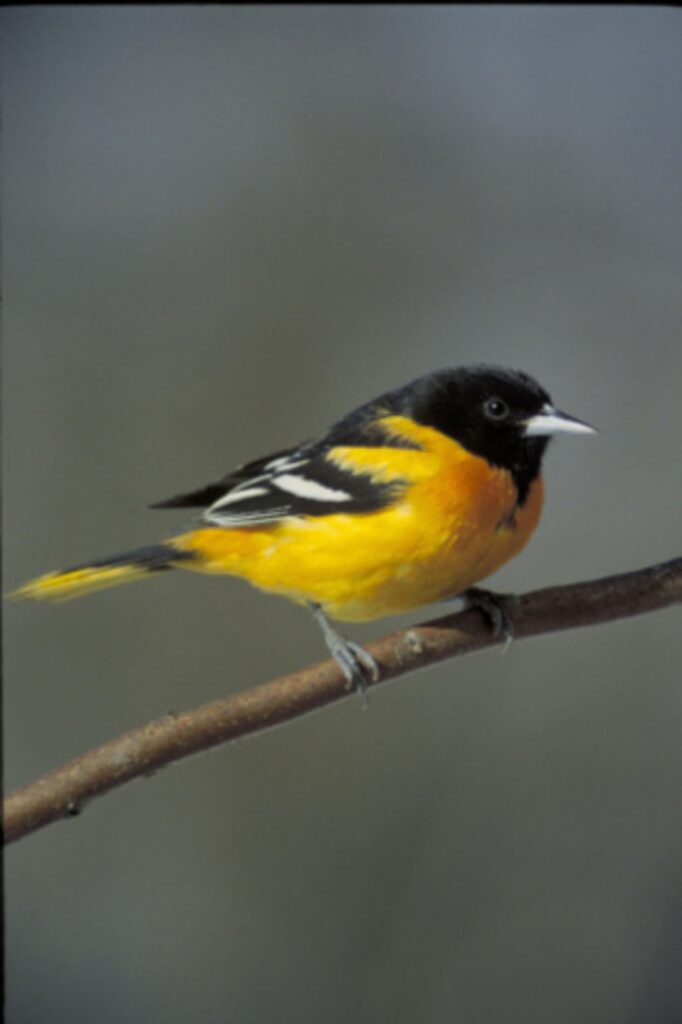
- Baltimore Oriole (late April to August): males are flame-orange and black; females are yellow-orange with dusky wings. They weave hanging, sock-like nests high in tall trees. Attract them with orange halves and grape jelly.
- Ruby-throated Hummingbird (late April to September): the only hummingbird that nests in the eastern U.S. Males have a glowing red throat. Attract them with red tubular flowers and a feeder of 1 part sugar to 4 parts water (no red dye).
[Photo: male Baltimore Oriole. Alt text: “Orange and black male Baltimore Oriole in Ohio”. File: baltimore-oriole-ohio.jpg]
Winter birds in Ohio
- Dark-eyed Junco (October to April): nicknamed “snowbirds,” juncos arrive in fall as the weather cools. They’re slate-gray above with a white belly, a pale pink bill, and white outer tail feathers that flash when they fly. They feed on the ground under feeders.
- White-throated Sparrow (fall to spring): a sparrow with a crisp white throat, a striped head and a yellow spot between the eye and bill. Its whistled song sounds like Old Sam Peabody, Peabody, Peabody.
Special birds worth seeking out in Ohio
These birds aren’t backyard regulars, but they’re highlights for Ohio birders, especially during spring migration in May.
- Rose-breasted Grosbeak: males are black and white with a bright rose-red triangle on the breast; females are brown and streaky with a bold white eyebrow. Their song sounds like a robin that’s taken voice lessons. Look in woodlands in spring and summer.
- Scarlet Tanager: breeding males are vivid red with jet-black wings and tail; females are olive-yellow. They stay high in the canopy of mature forests, so listen for their hoarse, robin-like song.
- Bobolink: males are black below and white above with a buff-yellow nape, the reverse of most birds. They arrive in Ohio hayfields in early May after wintering in South America, and sing a bubbly, tumbling song.
- Eastern Towhee: a large sparrow; males are black above with rusty sides and a white belly, while females are brown where males are black. They scratch noisily in leaf litter for seeds and insects and sing drink-your-tea!
- Swamp Sparrow: a marsh sparrow with rusty wings, a gray face and a reddish cap in breeding season. Males and females look alike. Listen for its slow, musical trill in cattails.
Where to go birding in Ohio
- Magee Marsh Wildlife Area (Lake Erie shore): one of the best places in North America to see migrating warblers in May, home to the “Biggest Week in American Birding” festival. The Black Swamp Bird Observatory lists more hotspots nearby.
- Ottawa National Wildlife Refuge and Maumee Bay State Park: marshes, shorebirds and waterfowl near Magee Marsh.
- Cuyahoga Valley National Park: forests, wetlands and fields between Cleveland and Akron.
- Your own backyard: a feeder, a water source and native plants will bring in most of the birds on this list.
New to birding? Start with our guide to bird watching for beginners and pick up a pair from our best binoculars for bird watching. Free apps like Merlin Bird ID can identify birds by photo or song.
Ohio birds FAQ
What is the most common bird in Ohio? The Northern Cardinal is the bird Ohio birders report most often. By sheer numbers, though, ODNR says the European Starling is probably the most numerous.
What is Ohio’s state bird? The Northern Cardinal, adopted in 1933.
How many bird species live in Ohio? Ohio has recorded 421 bird species. About 300 appear every year, and about 180 nest in the state (ODNR).
What are the red birds in Ohio? Most likely a Northern Cardinal (all red with a crest) or a House Finch (red head and breast with a streaky belly). In summer, look for the Scarlet Tanager (red body, black wings) in forests.
What birds stay in Ohio for the winter? Cardinals, Blue Jays, chickadees, titmice, nuthatches, woodpeckers, goldfinches and many robins stay all year. Dark-eyed Juncos and White-throated Sparrows arrive just for winter.
When is the best time to go birding in Ohio? May. Spring migration brings dozens of warbler species through the state, especially along Lake Erie.
Compare Ohio’s birds with the most common birds in North Carolina, Georgia and Florida.