
The most common birds in North Carolina are the backyard regulars you can see all year: the Northern Cardinal (the state bird), House Finch, Tufted Titmouse, Mourning Dove, Carolina Wren and Carolina Chickadee. Put up a feeder almost anywhere in the state, from the mountains to the coast, and these birds will find it.
North Carolina’s official bird list has 501 species, according to the Carolina Bird Club. This guide covers the 15 birds you’re most likely to see, ranked by how often they showed up at North Carolina feeders in Project FeederWatch, the Cornell Lab of Ornithology’s citizen science survey. You’ll also find the summer and winter visitors, a few specialties of the coast and mountains, and the best places to go birding in NC.
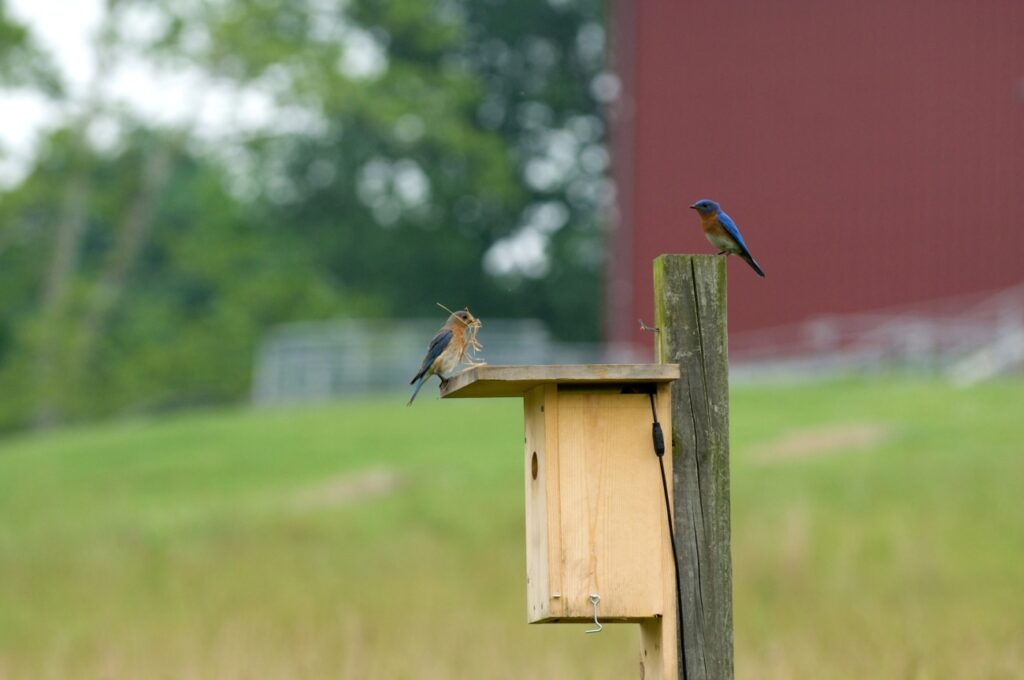
North Carolina’s most common birds at a glance
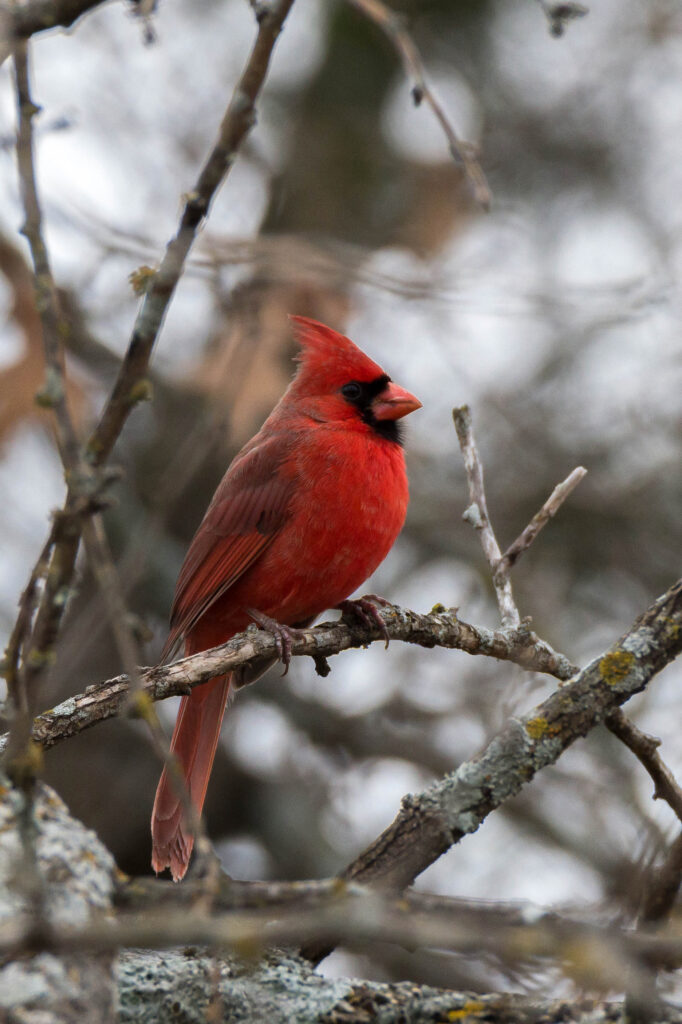
1. Northern Cardinal
How to identify it: males are bright red all over with a pointed crest and a black mask around a thick, cone-shaped orange bill. Females are warm tan with red edges on the wings, crest and tail.
Song: loud, clear whistles like cheer-cheer-cheer or birdie-birdie-birdie. Both males and females sing.
Attract it: black-oil sunflower or safflower seed on a platform or hopper feeder, plus dense shrubs for cover.
The cardinal has been North Carolina’s state bird since 1943. It wasn’t the first choice: in 1933 the General Assembly named the Carolina Chickadee the state bird, then repealed it within a week, partly because its nickname, “Tomtit,” seemed undignified (NCpedia).
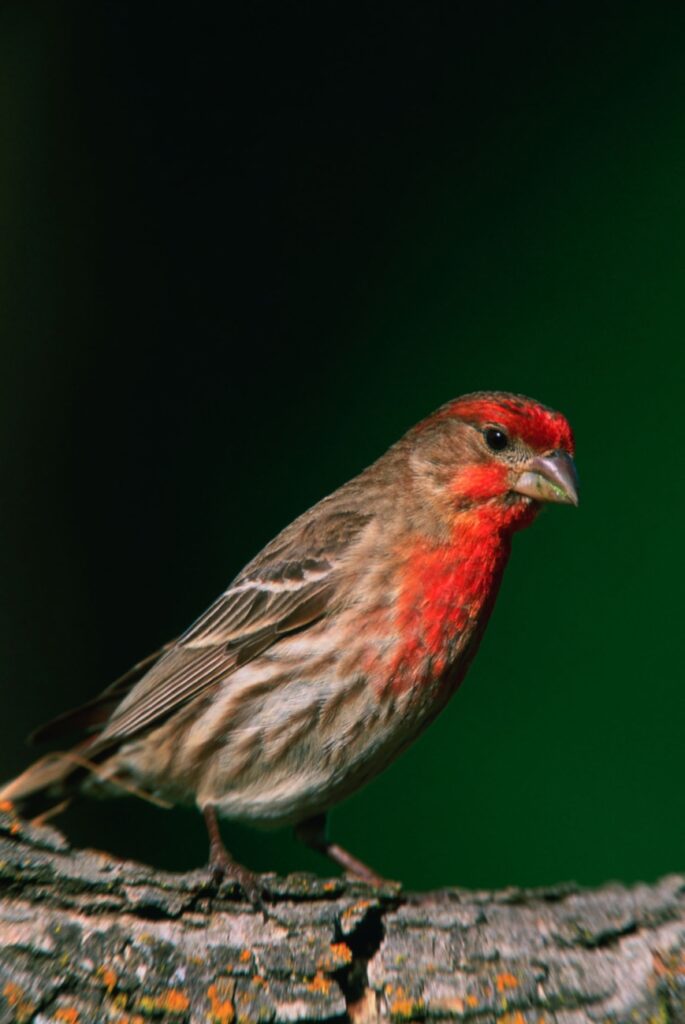
2. House Finch
How to identify it: males have a red or orange-red head, breast and rump with brown streaks down the belly and sides. Females are plain gray-brown and streaky all over. The streaky belly is the quickest way to tell a male House Finch from a cardinal.
Song: a long, cheerful warble that often ends in a buzzy note.
Attract it: sunflower seed in tube or hopper feeders.
House Finches are native to the western U.S. They were sold as caged birds in New York, released on Long Island around 1940, and spread across the East from there.
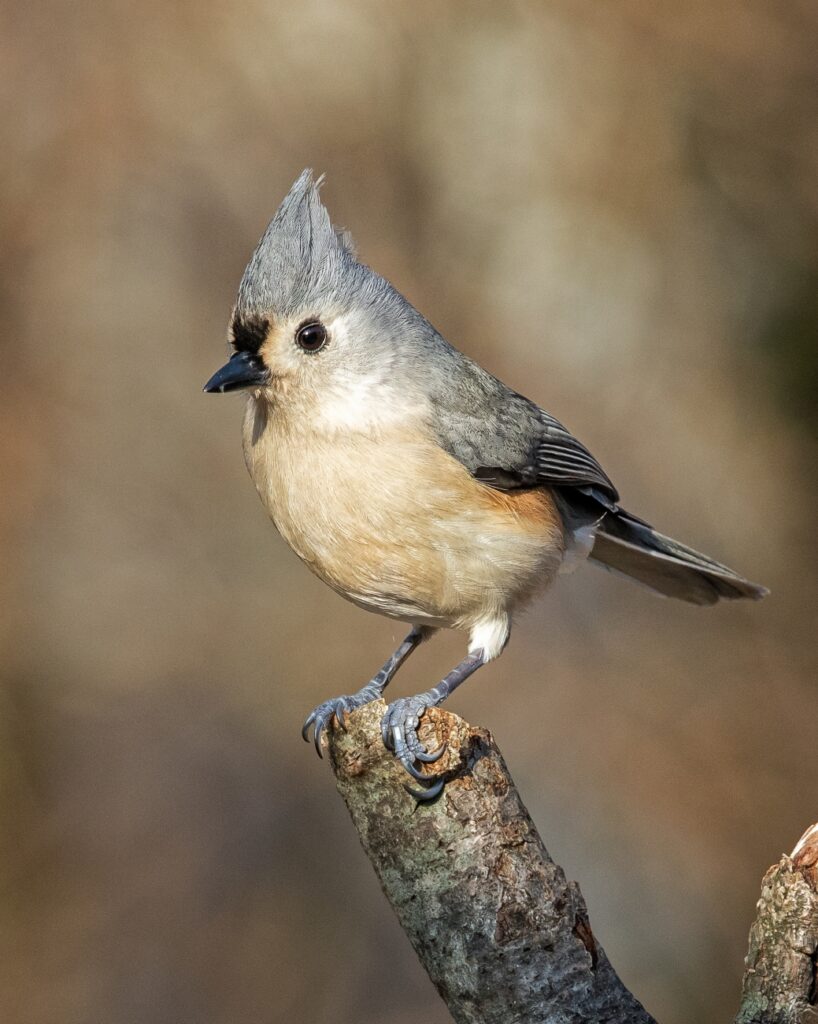
3. Tufted Titmouse
How to identify it: a small gray bird with a pointed crest, a white belly, rusty-peach sides, a black patch above the bill and big dark eyes.
Song: a whistled peter-peter-peter that carries a long way through the trees.
Attract it: sunflower seed and peanuts. Titmice grab one seed, fly off to crack it open or hide it, and come right back for another.
In fall and winter, titmice stash seeds in bark crevices to eat later. They’re bold and curious: they hang upside down to check twigs from every angle, and sometimes perch at a window and peer in. In spring they line their nests with soft hair, sometimes plucked straight from a dog or squirrel.
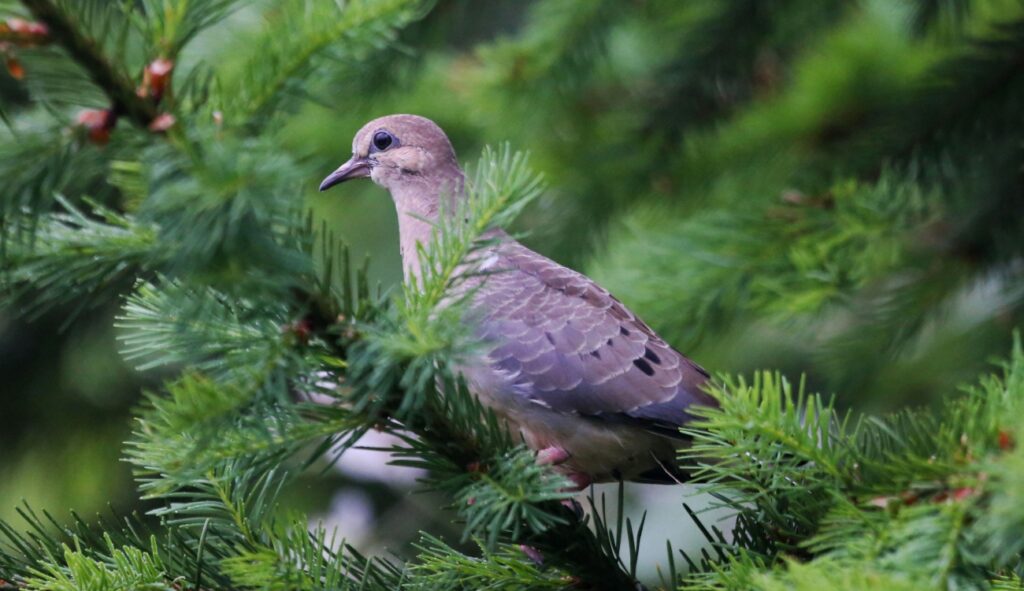
4. Mourning Dove
How to identify it: a slim, gray-tan bird with a small head, black spots on the wings and a long, pointed tail with white edges.
Sound: a soft, mournful coo-OO-oo-oo-oo that’s easy to mistake for an owl. Their wings whistle when they take off.
Attract it: millet, cracked corn or mixed seed scattered on the ground or on a platform feeder.
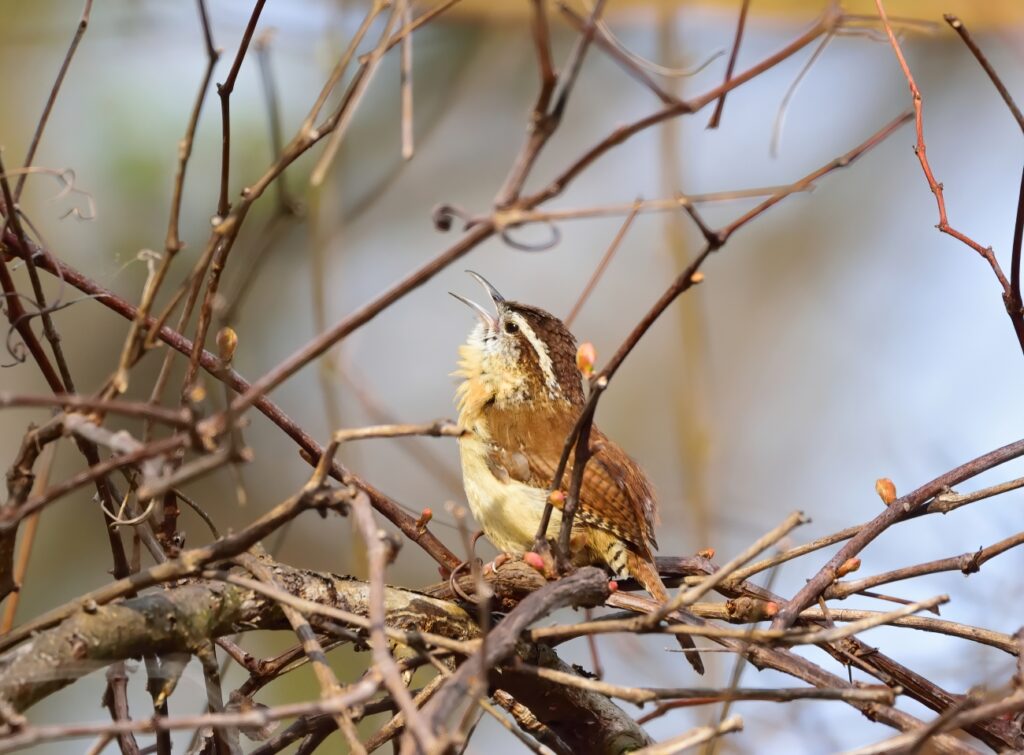
5. Carolina Wren
How to identify it: a small, round, rusty-brown bird with a warm buff belly, a long white eyebrow stripe, and a tail it often holds cocked up.
Song: a loud, rolling tea-kettle, tea-kettle, tea-kettle. Only males sing it, and you’ll hear it all year. Females often answer with a chattering call, so a pair can sound like one bird.
Attract it: suet and mealworms, plus brush piles or thick shrubs for cover.
Carolina Wrens stay with the same mate year-round and are known for nesting in odd places: hanging plants, mailboxes, old boots and garage shelves.
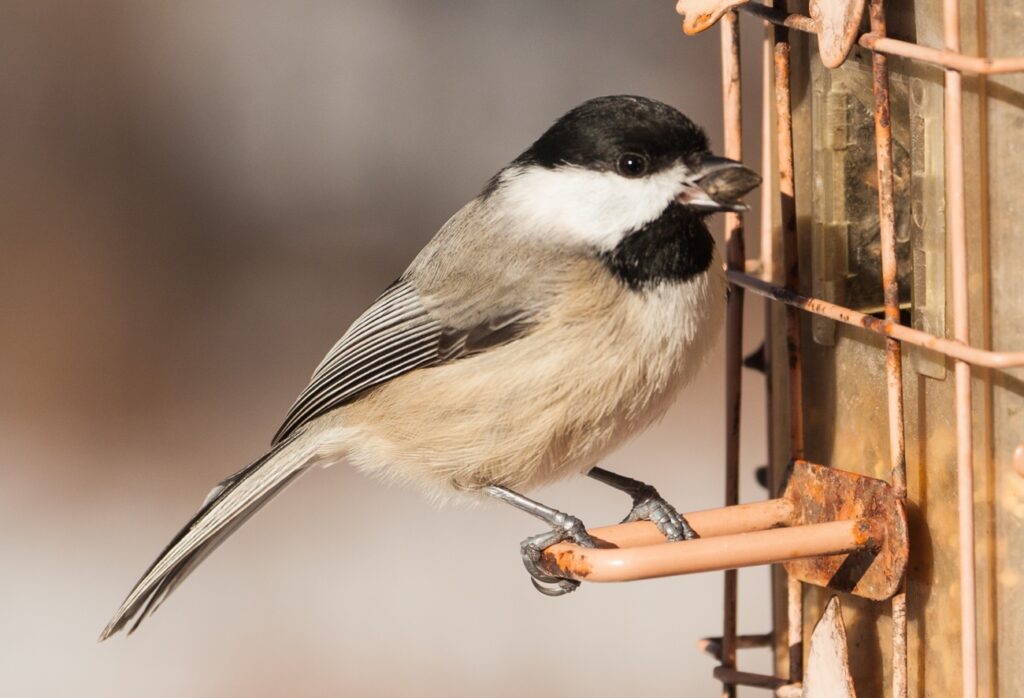
6. Carolina Chickadee
How to identify it: a tiny bird, about 4 to 4.75 inches long, with a black cap and bib, white cheeks, a gray back and a pale belly.
Sound: the call that gives it its name, chickadee-dee-dee-dee, plus a four-note whistled song, fee-bee fee-bay.
Attract it: sunflower seed and suet at hanging feeders, plus nest boxes. Chickadees prefer to grab food from a feeder rather than off the ground.
Chickadees are tough for their size. On cold nights they fluff out their feathers for insulation, roost in tree cavities, and lower their body temperature to save energy (Columbus Audubon). They also hide hundreds of seeds and remember where they put them.
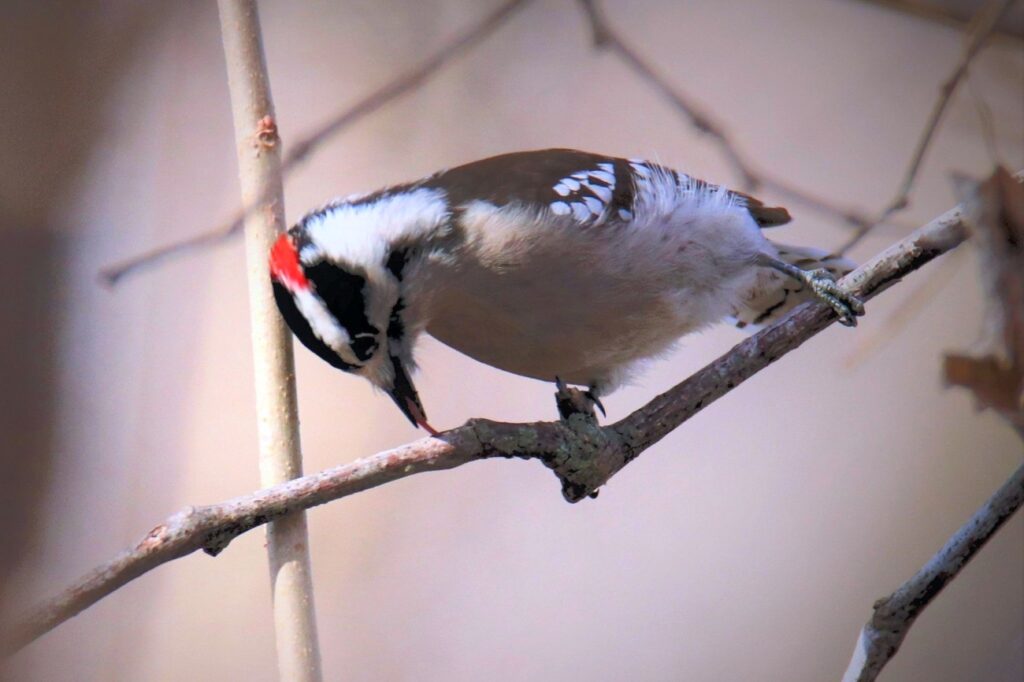
7. Downy Woodpecker
How to identify it: the smallest woodpecker in North America, at 5.5 to 6.7 inches. It’s black and white, with a white stripe down the middle of its back, white spots on black wings, and a short bill. Males have a small red patch on the back of the head.
Sound: a sharp pik call and a whinnying rattle that drops in pitch. In spring, they drum fast on trees and gutters to claim territory.
Attract it: suet, especially in winter.
The Hairy Woodpecker looks almost the same but is bigger, with a bill nearly as long as its head. The Downy’s bill is about a third the length of its head.
8. Red-bellied Woodpecker
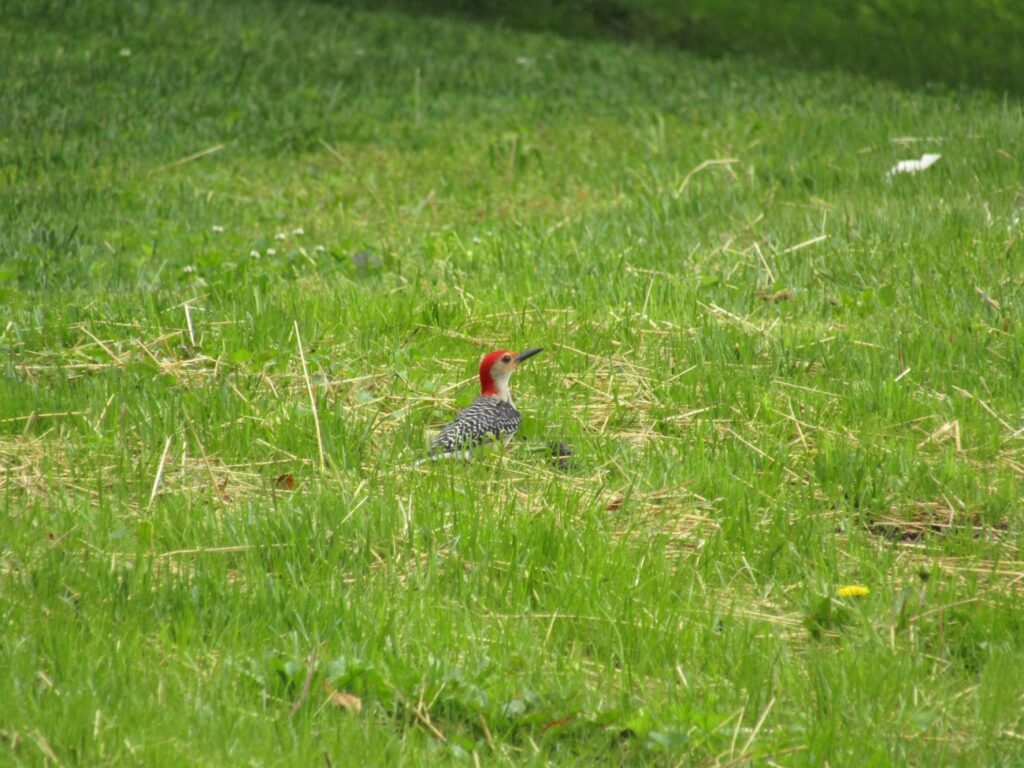
How to identify it: a medium-sized woodpecker with a black-and-white barred back and a pale face. Males have red from the bill to the back of the neck; females have red only on the back of the neck. The red belly it’s named for is just a faint blush that’s hard to see.
Sound: a rolling churr or kwirr.
Attract it: suet, peanuts and sunflower seed.
9. Eastern Bluebird
How to identify it: males are bright blue above with a rusty-orange throat and breast and a white belly. Females have the same pattern in softer gray-blue and orange.
Sound: a soft, warbling chur-lee, chur-lee.
Attract it: mealworms in a dish feeder, and a nest box on a post facing an open lawn or field.
Bluebirds hunt from a perch. Look for them on fences, wires and low branches along fields and roadsides. They watch the grass, then drop down to grab an insect, sometimes catching one in midair. When insects get scarce in fall and winter, they switch to berries from plants like dogwood, holly and sumac. In spring, males chase each other at high speed over territory.
10. Blue Jay
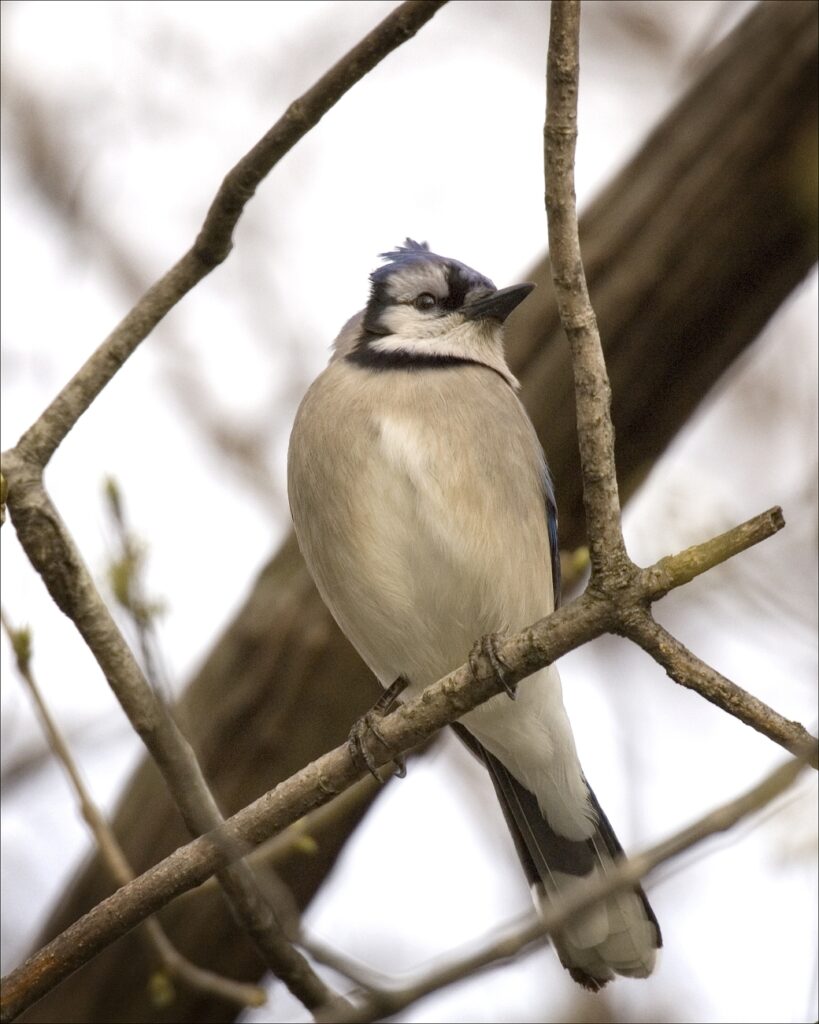
How to identify it: a large, crested songbird, bright blue above and white below, with a black necklace and black bars on blue wings and tail.
Sound: a loud jay-jay scream, plus quiet clicks and whistles. Blue Jays also imitate hawks, especially Red-shouldered and Red-tailed Hawks, possibly to warn other jays or to clear birds off a feeder.
Attract it: peanuts (in or out of the shell) and sunflower seed on a platform feeder.
Blue Jays love acorns and bury thousands of them each fall to eat later. The ones they forget can sprout, which helps spread oak trees. They’re omnivores and occasionally take eggs or nestlings from other birds.
11. American Goldfinch
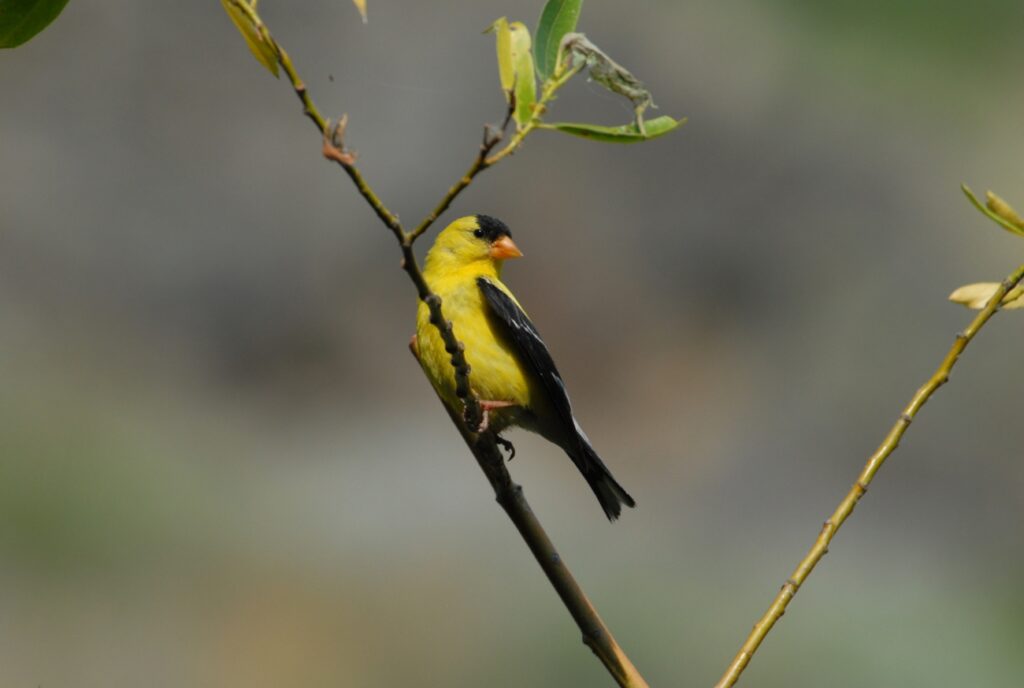
How to identify it: in spring and summer, males are bright lemon-yellow with a black cap and black wings marked with white. Females are a duller yellow-olive. In winter both turn drab olive-brown but keep their black-and-white wings.
Sound: a long series of twitters and warbles. In flight they call po-ta-to-chip with each dip of their bouncy flight.
Attract it: nyjer (thistle) seed in a finch feeder, plus sunflower hearts.
Goldfinches nest later than almost any other North American bird, often waiting until July, when thistles and other plants produce soft down to line their nests. Look for them in weedy fields, roadsides and floodplains.
12. Brown Thrasher
How to identify it: a long, slim bird with a rich rusty-brown back, heavy dark streaks on a pale breast, yellow eyes, a long tail and a slightly curved bill.
Song: a long run of phrases, each usually sung twice. Brown Thrashers have one of the biggest song repertoires of any North American bird, with more than 1,100 song types recorded.
Attract it: seed and suet crumbs on the ground near thick shrubs. Thrashers feed by sweeping leaf litter aside with their bills.
13. Chipping Sparrow
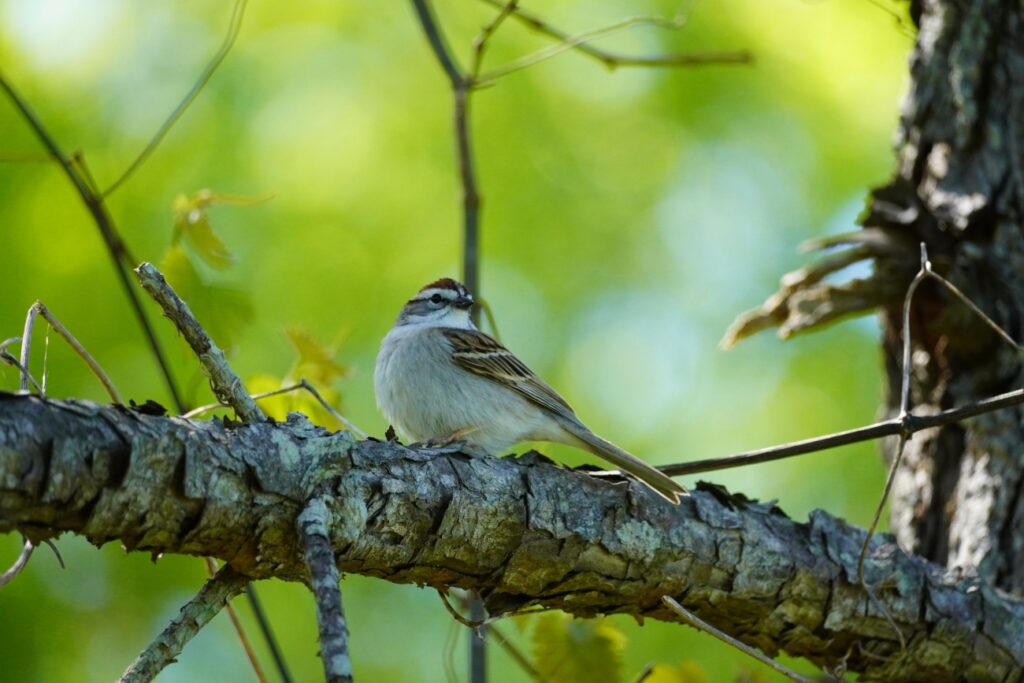
How to identify it: a small, slim sparrow with a bright rusty cap, a black line through the eye, a white eyebrow and a clean gray breast. In winter the cap fades to brown.
Song: a fast, dry, mechanical trill on one pitch.
Attract it: millet and mixed seed on the ground or a platform feeder. Chipping Sparrows feed in small flocks on lawns and under feeders.
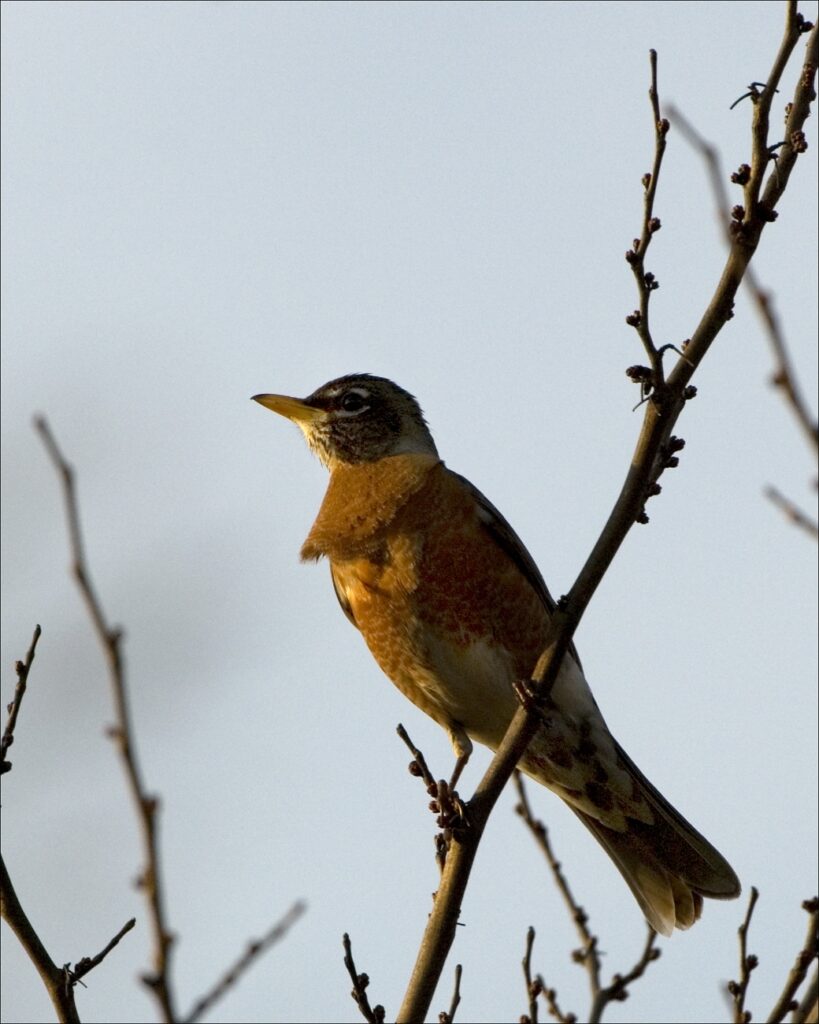
14. American Robin
How to identify it: a large songbird with a gray-brown back, a warm orange breast, a dark head, a yellow bill and white under the tail.
Song: a cheerful cheerily, cheer-up, cheerio, often the first song at dawn in spring.
Attract it: mealworms, fruit and a birdbath. Robins don’t eat much seed.
In spring and summer, robins run across lawns and stop to pull up earthworms. In winter they gather in big flocks to eat berries. When those berries ferment, robins sometimes get tipsy and stumble.
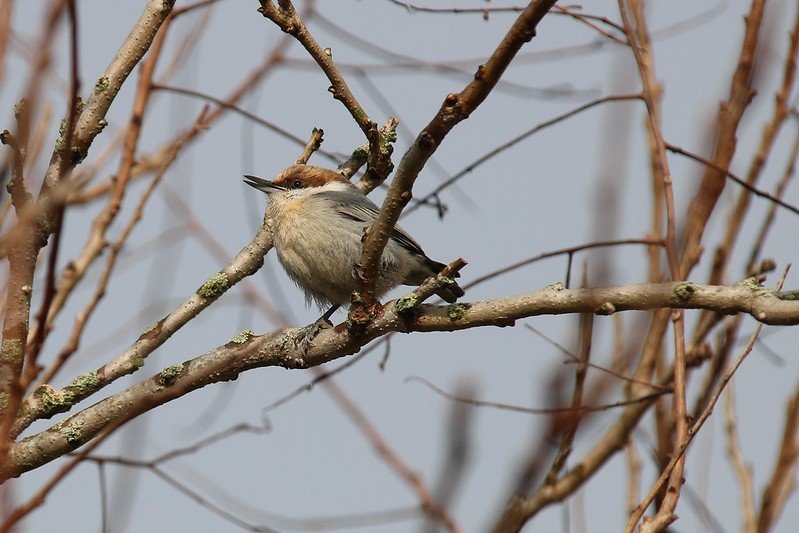
15. Brown-headed Nuthatch
How to identify it: a tiny, short-tailed bird with a brown cap, a white cheek and throat, and a blue-gray back. Like other nuthatches, it climbs up, down and sideways on trunks and branches.
Sound: a squeaky call that sounds like a rubber duck toy.
Attract it: sunflower seed and suet.
This is a Southern pine specialist, found in pine forests across North Carolina’s Piedmont and Coastal Plain. It’s one of the few birds known to use tools: it holds a flake of bark in its bill and uses it to pry up other bark to reach insects underneath.
Other common birds in North Carolina
You’ll see these almost everywhere too, even though they don’t visit feeders as often:
- Northern Mockingbird: gray with flashing white wing patches. It sings long strings of other birds’ songs, sometimes all night in spring.
- American Crow: all black and noisy. Crows are among the smartest birds: they drop nuts on hard surfaces to crack them, and they gather around a dead crow, likely to learn about danger (Audubon).
- House Sparrow: not native, and almost always near buildings, parking lots and restaurants. Males have a gray crown, black bib and chestnut on the sides of the head; females are plain buff-brown with a pale eyebrow.
Summer birds in North Carolina
These birds arrive in spring, nest in North Carolina, and head south in fall.
- Ruby-throated Hummingbird (April to October): the only hummingbird that nests in the eastern U.S. Males have a glowing red throat. Attract them with red tubular flowers and a feeder of 1 part sugar to 4 parts water (no red dye).
- Summer Tanager (April to September): males are rosy red all over with no crest and no black mask, which sets them apart from cardinals. They specialize in catching bees and wasps in open woods.
- Indigo Bunting (April to October): males are brilliant blue all over; females are plain brown. Listen for their paired, sing-song phrases from wires and treetops along field edges.
- Gray Catbird (spring through fall): a slate-gray bird with a black cap that hides in thickets and makes a cat-like mew.
Winter birds in North Carolina
- White-throated Sparrow (October to April): a sparrow with a crisp white throat, a striped head and a yellow spot by the eye. Its whistled song sounds like Old Sam Peabody, Peabody, Peabody.
- Dark-eyed Junco: slate-gray above, white below, with a pale pink bill and white outer tail feathers that flash in flight. Juncos spread across the state in winter, and some live year-round on the highest mountains.
- Yellow-rumped Warbler: one of the few warblers that stays all winter, thanks to its ability to digest wax myrtle berries. Look for the yellow patch above the tail.
Birds of the North Carolina coast and mountains
North Carolina’s birds change with the landscape. On the coast, look for Brown Pelicans gliding in lines over the surf, plus gulls, terns and shorebirds on the beaches. In winter, thousands of Tundra Swans gather on Lake Mattamuskeet. In the longleaf pine forests of the Sandhills and Croatan National Forest, look for the endangered Red-cockaded Woodpecker alongside Brown-headed Nuthatches. High in the mountains, birds like the Canada Warbler and Blackburnian Warbler nest in forests that feel more like Canada than the South.
Where to go birding in North Carolina
- Pea Island National Wildlife Refuge (Outer Banks): more than 350 species have been recorded here.
- Mattamuskeet National Wildlife Refuge: thousands of Tundra Swans winter on the state’s largest natural lake.
- Weymouth Woods Sandhills Nature Preserve: longleaf pine habitat with southern pine specialists, close to Southern Pines.
- Blue Ridge Parkway and Mount Mitchell: high-elevation warblers in spring and summer, and hawk migration in fall.
- Your own backyard: a feeder, a birdbath and native plants will bring in most of the birds on this list.
For more hotspots, see Audubon’s guide to birding in North Carolina. New to birding? Start with our guide to bird watching for beginners, pick up a pair from our best binoculars for bird watching, and when you’re ready to take pictures, read our bird photography guide for beginners. Free apps like Merlin Bird ID can identify birds by photo or song.
North Carolina birds FAQ
What is the North Carolina state bird? The Northern Cardinal, adopted in 1943. The Carolina Chickadee held the title for less than a week in 1933 before lawmakers repealed it.
What is the most common bird in North Carolina? The Northern Cardinal. It was reported at 96% of North Carolina Project FeederWatch sites in spring 2026, more than any other bird.
How many bird species are in North Carolina? The Carolina Bird Club’s official state list has 501 species, including 11 provisional records.
What are the red birds in North Carolina? Most likely a Northern Cardinal (all red with a crest and black mask) or a male House Finch (red head and breast with a streaky belly). In summer, look for the Summer Tanager (all red, no crest) in open woods, and the Scarlet Tanager (red with black wings) in mountain forests.
What are the blue birds in North Carolina? The Eastern Bluebird (blue with an orange breast) and the Blue Jay (large, crested, blue and white) are here all year. In summer, add the Indigo Bunting (all blue) and the Blue Grosbeak (deep blue with rusty wing bars).
What birds stay in North Carolina for the winter? All 15 birds on this list can be found in winter. White-throated Sparrows, Dark-eyed Juncos and Yellow-rumped Warblers arrive just for the cold months.
Compare North Carolina’s birds with the most common birds in Ohio, Georgia and Florida.